


Planning Your First Backyard Aquaponics System
Building your own aquaponics system starts with a little planning and an understanding of the basics. Choosing a suitable location and keeping the design simple design will make it easier to get started growing fish and tasty veggies in your own backyard.
For your first build, I'd recommend starting with a simple media bed system. A small barrel setup suits a few ornamental fish, while an IBC based "Chop and Flip" gives you more room to grow and is suitable for a few table fish.
On this page, I’ll run through what to look for in a location and which materials, tools and equipment you’ll need so you can choose a build that suits your space and what you’d like to grow.
By Rob Bob · Rob's Aquaponics
ON THIS PAGE....
WATCH: Aquaponics |What You Need and How to Start

A practical backyard build starts with a suitable location and a manageable design.
Planning and Location
Choose a stable, level position with enough sunlight for the plants you want to grow. Check how shade changes throughout the year. A position a good summer location might spend much of winter shaded by a house, fence or tree so you may have to make some compromises to get the best year round growth.
Generally speaking its best to keep the fish tank shaded through the warmer months. If you live in a cooler climate look for a location that gets shade through summer and direct sun during winter. The winter sun may help warm the water enough to keep the fish feeding well and supplying nutrients to the plants through the cooler months.
This rough sketch shown is for the southern hemisphere. Folks in the northern hemisphere would orientate their system towards the south to make advantage of the Winter sun.
Make sure you have enough room to reach all parts of your grow beds, access the fish and sump tanks as well as clean filters without having to climb over or reach through plumbing.
Access to water taps and a suitable outdoor electricity supply should also be taken into account when locating and designing your system.

Also take into consideration where any overflow water will go if you live in a region with heavy rainfall.
Level ground is the easiest place to set up an aquaponics system, but you can build on a slope or uneven terrain if your tanks and grow beds have firm, level bases.
Make sure you allow room for maintenance and moving around your aquaponics system. It should be situated to allow for some extra grow beds just in case you get bitten by the Aquaponics Bug.
Tanks, Drums and Troughs
While you can buy "off the shelf" aquaculture tanks and grow troughs, suitable second-hand containers can save you a lot of money on your first aquaponics build.

Aquaculture Tank With Central Base Drain

Recycled IBC's, Drums, Totes & Troughs
Recycled IBC's, Drums and Troughs


I like to look for recycled containers that previously held foods or food ingredients. Check the label and confirm the previous contents with the seller, even if the container has already been cleaned. I do tend to steer clear of containers that held cooking oil in them as they can be a pain to get 100% clean.
Most DIY Aquaponics systems I've built or helped with were made from recycled materials such as Intermediate Bulk Containers (IBCs), barrels or storage totes made from food safe plastics like High-Density Polyethylene (HDPE2). I've found that most farm or animal supply stores will stock cleaned IBCs and drums, or if they don't, will know where to send you.
Poly Tanks, Totes and Pond Liner
A larger poly stock tank or trough works well as a fish tank that can be plumbed into one or more grow beds.
You can also use food grade and fish safe EPDM rubber liners for ponds / fish tanks or grow beds. This can be useful in systems where you need to create custom sized beds to fit a particular space. Mathew's system below uses a liner for the fish pond and also includes a tote as a sump tank and PVC pipes for growing plants.


Aquariums
Aquariums with ornamental fish make great starting point for a small aquaponics systems. These can be set up on a stand or on a bench to grow a few plant in a tub or, if you have the space, turn it into a feature right in your kitchen.


Bathtubs
Bathtubs also make great grow beds and small fish tanks. I prefer to use metal ones as they will stand up to the sunlight and weather better than the acrylic and fiberglass tubs. The existing drain also gives you a starting point for the drain plumbing. I like to use them as trough for wicking bags for growing root crops like potatoes and ginger.


PVC Pipes
Lengths of potable water rated PVC pipe are used by many as grow channels and can be a great way to squeeze in a few more leafy greens alongside your grow beds. You can buy PVC rails designed for hydroponics or make your own using food grade PVC pipe.
Holes are evenly spaced out along the pipes length then plants are grown in them supported by net cups or grow grips with their roots dipping into the water below.
You can run a thin film of water along the bottom of the pipe that exits an open end, known as Nutrient Film Technique (NFT), or install a raised outlet using an end cap to keep a deeper flow of water in the pipe, a variation on the Deep Water Culture (DWC).


Whatever you use, check that it’s safe for fish, strong enough to hold the weight of the water, wet grow media, and UV stable if it’s set up outdoors. Make sure that all tanks and beds are located on prepared and firm level ground. Ensure that grow beds are well secured to prevent any accidents that may be caused by being knocked or used as a jungle gym by "enthusiastic" children.
Tools Required
Depending on the type of aquaponics system you are building, you may need to cut metal, plastic or timber. Most folks will already have many of these tools in their DIY kit. There are a few tools, like the Torx bits for the screws in an IBC cage and the hole saws for larger Uniseals and pipe fittings, that may need to be purchased or borrowed from friends or family.
Basic tools
-
Marker pen, tape measure and spirit level
-
Drill and hole saws sized for your fittings
-
Hacksaw or PVC pipe cutter, and a utility knife for trimming hose
-
File or deburring tool to clean up drilled holes, cut pipe and containers
-
Screwdrivers and pliers / grips
-
PVC primer, cement and rags if you’re gluing fittings
-
Suitable safety glasses and hearing protection
Tools for larger builds
-
Jigsaw with plastic and metal blades
-
Reciprocating saw with a metal-cutting blade
-
Angle grinder
-
Timber saw for plastic or if you’re building grow bed stands

Plumbing
Sketch the water’s path before buying fittings or pipe.
Make sure you can easily reach the pump, valves and drains for cleaning and maintenance once the system is up and running.
PVC plumbing supplies are readily available from most hardware or specialty plumbing supplies stores. Regulations change from country to country so it would be best to enquire at a plumbing supply store as to which pipe and fittings are rated potable water safe.
The barbed fittings can be found in hardware, garden and irrigation supply stores in Australia. You may need to look for them in irrigation, RV and boating supply stores elsewhere in the world.

Not all parts you need for an aquaponics system can be bought off the shelf. Solids Lifting Overflow (SLO) and drain fittings are two fittings that are easy to DIY yourself.
I like to use custom fittings on SLO pipes to reduce access to drain pipes for curious fish that would like to explore the rest of the system.
Drain fittings with added flanges also help to create extra drag along the floor of tanks and filters for solids collection.


Watch on Rob's YouTube channel: DIY Solids Lifting Outlet and Drain Fittings →
When it comes to building your system, make sure you measure each run of pipe or hose twice before cutting. It might just save you from a mad dash back to the store just before closing on a Saturday afternoon after cutting a crucial section too short.
Selecting Water Pumps
Aquarium and pond pumps are an excellent choice for your backyard aquaponic systems. Most folks use a submersible pump that sits underwater in the fish tank or sump.
An amphibious pump (also called a wet/dry pump) gives you more flexibility and may be a better choice for some larger systems. It can be plumbed outside the tank and moved into a tank later if your layout changes.

For larger systems I like to use a variable-speed pump that allows me to increase flow rate as new beds are added to the system. These come with a controller that sits outside the water so flow rates can be easily adjusted.

Pond and Aquarium Pumps

Variable Flow Rate Pond Pump
Keep in mind the location of the power supply is when purchasing as some pumps will have longer leads than others. Some manufacturers will offer different lead length options which is very handy.
If you’re setting up your system on a slope, you will need to think about how high the water will need to be lifted by the pump.


The vertical distance from the water surface in the sump to the outlet where the water enters the fish tank is called static head or head height and comes into play when you think about pump selection for your system.
It pays to look at the flow charts when shopping for a new pump to make sure it’ll deliver enough water to the highest point in your system.
The charts generally have a few models in the same range listed to help you decide which one would be best for the head height of your system.
The pipes and fittings will also restrict the water flow so you need to allow for this loss of flow when reading the charts.
These added flow restrictions are the reason I like to oversize the pumps when designing my systems.
Water Pumps · from the shop
Aqua Zonic Sumo Pumps
Sumo G2 pumps can be used submerged or inline and designed for Aquaponics, Aquariums and Ponds

Air Supply
I like to recommend that you get a dedicated air supply as well as a back up aeration device in case of power failure for your fish tank. A separate mains powered air pump can help if the water pump fails, but you’ll need an independent power source to keep air flowing during a blackout.

240v Air Supply Pumps

240v Air Pump with Battery
12v Air Pump
I like to have a dedicated 12V backup system on standby at all times that will come on automatically when the power has been cut. You can buy off the shelf pumps that have built in batteries for smaller systems but larger ones may require a larger setup. These 12v backup air systems are easy to make from readily available components.
Watch on Rob's YouTube channel: DIY BACKUP AIR SYSTEM HERE →
Grow Media For Beds
Growing media supports plant roots and provides surfaces for the beneficial bacteria that process fish waste.
Fish numbers must suit the system’s biological filtration, aeration and solids management—not just the tank size. Plan around the fish at harvest size.
Learn about backyard fish stocking rates →
Expanded Clay is popular in smaller aquaponics systems because they’re lightweight and easy on the hands when planting and harvesting. You can buy them from hydroponics stores and some well-stocked hardware and garden centres, although filling several large beds can become expensive.
Expanded Shale is also a great lightweight media available in the USA.
Scoria / Volcanic Rock can be light weight and cheaper alternative to the expanded clay media. Scoria can be found in hardware and garden supply centers.
Rocks around 20 mm / ¾" are large enough to allow for water to drain well through the media while also providing support for roots.
Avoid the carbonate rich limestone rock blends. These will breakdown in aquaponics systems due to the slightly acidic water chemistry which can keep the water alkaline and pH elevated.
Carbonate Free Rock
Scoria / Lava Rock

Expanded Clay
Expanded Shale
Grow beds can get very heavy once filled with media and water so make sure your grow beds and their stands can support the combined weight of both and the plants you'll be growing.
Wash your chosen media thoroughly before filling the beds to remove dust and fine particles. It will be very hard to remove all the dust but the water will clear up and solids settle out after the water has been circulating for a few days.
Testing Equipment
I think a test kit is an essential piece of equipment when running an aquaponics system.

Freshly Cycled Aquaponics System Test Results
Learn how to cycle your aquaponics system before adding fish: How to Cycle an Aquaponics System→
Not only will it help when cycling an aquaponics system but it will help you to know nitrate levels when it comes to adding more plants into your system. They are also handy to have if you start to have issues with the health of the fish. The basic freshwater test kit allows you to check ammonia, nitrite, nitrate and pH. While these tests can be purchased separately it works out a lot cheaper to buy them in a master kit.
Water testing · from the shop
API Freshwater Master Test Kit
Ammonia, nitrite, nitrate and pH testing in one kit.

Watch: Planning and Starting an Aquaponics System
In this video, I walk through the main things to consider, from choosing a location and equipment through to getting your first fish and plants established.
Watch on Rob's YouTube channel: Starting an Aquaponics System
Want To Know How Aquaponics Works?
New to Aquaponics?

Easy DIY Aquaponics "Chop and Flip" Systems
One of the easiest DIY systems to start off with are the basic "Chop & Flip" aquaponics systems made from recycled barrels & IBC's.
Aquaponics Chop and Flip Barrel System
The "Chop and Flip" Barrel Aquaponic System is an easy DIY starter system that can be made by the easily sourced, standard 200L/50gal blue drum. These drums can be purchased from online sale sites such as Marketplace, Craigslist and Gumtree or your local rural supply store.
They're a great way for you to cut your teeth growing your own Aquaponic produce in a small system made from easily obtainable plumbing supplies and a small water pump that can be purchased from your local aquarium store.
These smaller systems are best "powered" by a few ornamental fish and the compact nature of this system means that it would easily fit in small courtyards and most balconies/decks.
Watch on Rob's YouTube channel: Chop and Flip Barrel Build
The cost for this barrel build was around AUD $145.00 (2026) buying all components from local retail stores.
With this build, I’d recommend using the lighter clay or scoria (volcanic rock) media as rock may prove to be too heavy for the plastic drum base.
Chop and Flip IBC Aquaponics System
An IBC Chop and Flip gives you a larger starting point for those that would like to grow a dozen or so table fish with the biofiltration provided by the media bed. The top section of the IBC is cut off, flipped over and becomes the grow bed while the bottom section serves as the fish tank.
The "Chop & Flip" IBC Aquaponic System now has its own page that includes a parts list for the pump plumbing, bell siphon & Canister filter.

Learn Aquaponics With Rob
What we ended up with was a system with hoses running everywhere that looked more like a Kraken from the deep sea than the efficient growing system I had built in my mind's eye.
These hoses and pipe were replaced very quickly once I was popped on to the right path from some helpful locals and online friends.
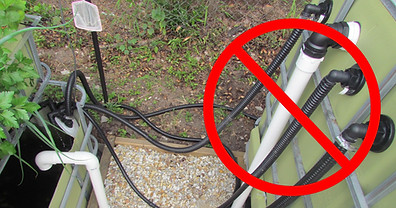
Building your first aquaponic system can appear to be a bit of a daunting process to some, something I know all too well myself.
It took almost two years of procrastination before I had a crack at building our first aquaponics system.
The Plumbing on Our First Aquaponics System
I’ve learned SO MUCH MORE about aquaponics and built loads of backyard systems over the past fifteen years and am only too happy to share this information with those that would like to grow some fish powered veggies in their backyard farm.
That’s why I put together my Backyard Aquaponics for Beginners guide, sharing the practical lessons I wish I’d had when I started. If you’d like a hand getting from the planning stage to building, cycling and running your own system, the step-by-step videos will help you along the way.


Where to From Here?
Click below to learn more about aquaponics.


